
International Projects
In addition to our core research programme, Lero researchers lead and actively participate as partners in international projects achieving significant success in Horizon Europe programmes and its predecessor Horizon 2020. Lero’s portfolio of projects demonstrates our successful track record in high-impact collaborative research with numerous partners from industry, academia, government, and civil society. Lero’s strives to create software for a better world and works across disciplines for greater impact.
If you are interested in collaborating with Lero on internationally-funded projects and programmes, then please contact martina.prendergast@lero.ie

Identity Compression and Polarization [ID-Compression]
Our social identity is closely connected with the information we receive, aiding us in better understanding how critical social topics become highly charged and divisive. A radical scientific proposal suggests that social polarisation occurs due to the compressibility of information, where attitudes provide redundant information about belonging to a particular group. With this in mind, the ERC-funded ID-COMPRESSION project proposes a theory of social normativity, suggesting that a polarised social information system is socially understandable. Such a system facilitates group processes, making positions comprehensible and socially meaningful. It also reveals how social identity becomes embedded in social information via social interaction, how the structured social information system provides conversion pathways, and how compressible social information systems are susceptible to pernicious polarisation.
Websites: https://michaelquayle.net/ https://cordis.europa.eu/project/id/101124175
Funding Programme: European Research Council ERC-2023-COG – ERC Consolidator Grants
Start date/End date: 1 January 2025 / 31 December 2029
Coordinator: University of Limerick, Ireland
Total value of award: €1,999,980
Lero researcher: Michael Quayle

Identity-Error: How Social Self-Evidencing Exposes Vulnerability to Falsehoods and Conspiracy Beliefs
Understanding how people discern the “truthfulness” of information is of fundamental importance to science. However, the complexity of dynamic information processing in social environments has made it convenient to “silo” research at different levels of analysis (neurological, psychological, social). To overcome this, we need end-to-end modeling that explains when and why people are vulnerable to falsehoods and mistruth.
IDENTITY-ERROR pursues a new methodological framework that integrates a social-identity approach with recent advances in computational modeling to socially embed the emotional and cognitive elements of epistemic processing. I propose that the experienced “truthfulness” of information is determined by a recursive process from individual (affect, cognition) to social (identity-structured information). A process of social-self-evidencing fits evidence to models in an identity-congruent manner by error-tuning, either rejecting evidence (common) or models (less common). Identity-imbued models of reality manage error, and in some conditions, objectively incorrect models are very effective error sinks (i.e. they allow good evidence to be easily rejected).
This breakthrough will be advanced by harnessing the identity structure of social information to make predictive processing models scalable at the social level. This allows the parallel computation of (i) information reliability alongside (ii) the social costs of accepting it as true (i.e. social evidencing). Importantly, error dynamics in these models enable the integration of emotional influence.
IDENTITY-ERROR will establish a new field of psycho-social identity modeling, optimized for understanding the social functions of maintaining falsehoods and conspiracies, and providing a firm basis for socially grounded health and science communication that is resilient to conspiracy theory and misinformation.
Website: https://cordis.europa.eu/project/id/101220950
Funding Programme: European Research Council ERC-2025-STG – ERC STARTING GRANTS
Start date/End date: 1 January 2026 / 31 December 2030
Coordinator: University of Limerick, Ireland
Total value of award: €1,499,093
Lero researcher: Paul Maher
Functional, Reliable and Adaptive Memory Errors (FRAME)
Autobiographical memory is highly malleable: simple conversation can reshape memories or even plant entirely false memories of events that never happened. This malleability is a universal feature of the human condition. Cognitive psychologists tend to be preoccupied with memory accuracy and refer to deviations from accuracy as errors, distortions and failures.
However, newly funded research led by Gillian Murphy is going to explore a radically different possibility: that the construction of false memories is functional and adaptive in and of itself. For her, memory did not evolve to act as a recording device. It evolved under the same selective pressures as anything else in the natural world: survival and reproduction.
Murphy’s research suggests that, in many situations, there may be a functional and adaptive tendency to sacrifice accuracy in favour of another outcome, such as improved wellbeing or social cohesion. To this end, she will develop a functional account of false memories to test the downstream benefits of such memories. This will involve testing experimentally how memory malleability may allow us to be happier with ourselves and integrate more effectively within our social groups. In contrast, she will also explore situations where memory accuracy may need to be prioritised for survival-related information. The study will also explore how we can harness functional false memories in an ethical way and will culminate in a new model of false memories.
The way we think about human memory could be completely transformed by this research, which would redefine our bugs as features.
Website: https://www.ucc.ie/en/news/2025/major-eu-project-led-by-ucc-to-investigate-false-memories.html
Funding Programme: European Research Council (ERC) Starting Grant
Start date/End date: 2026 / 2030
Coordinator: University College Cork, Ireland
Total value of award: €1,500,000
Lero researcher: Gillian Murphy
Attitude Maps 4 All
Delivering a useable method for mapping groups in attitude networks by developing a robust prototype, development community, and exploitation model to maximize the social value of the breakthrough [Attitude Maps 4 All]
Robust prototype software to map opinion-based groups.
There is a way to construct bipartite graphs directly from opinion surveys. The ERC-funded Attitude-Maps-4-All project will do so by applying a mathematical method that will yield a network representation of opinion-based groups. The method uncovers group structure, locates individuals in the space, allows the application of network methods to analyse their relations, and detects ideological polarisation, providing new insight on social attitudes and opinions, in a wide range of disciplines related to modelling attitudes and human behaviour. Understanding these processes is essential for addressing urgent social challenges requiring cross-partisan synchronisation of core attitudes and opinions. The project will prototype a robust software architecture and training resources, test and assess them, and explore cooperation for commercialisation.
Website: https://cordis.europa.eu/project/id/101069264 https://michaelquayle.net/
Funding Programme: European Research Council (ERC) Proof of Concept
Start date/End date: 1 September 2022 / 29 February 2024
Coordinator: University of Limerick
Total value of award: €150,000
Lero researcher: Michael Quayle

Aqua Research Infrastructure Services for the health and protection of our unique, oceans, seas and freshwater ecosystems [Aquarius]
Integrated research infrastructures for marine and freshwater preservation
AQUARIUS is a Horizon Europe project providing transnational access to 59 marine and freshwater research infrastructures via a single, user-friendly portal. These include research vessels, autonomous platforms, drones, satellites, observatories, labs, data systems and test sites. Through two transnational access funding calls, the project supports projects aligned with the EU Mission: Restore Our Ocean and Waters by 2030. Focused on Lighthouse Regions – Atlantic-Arctic, Baltic and North Sea, Black Sea, the Mediterranean and rivers – it promotes multidisciplinary research to protect ecosystems, reduce pollution and advance a carbon-neutral blue economy. The EU-funded AQUARIUS project emphasises training, open science, data interoperability and alignment with the European Green Deal, Digital Twin of the Ocean and UN Ocean Decade initiatives.
Website: https://aquarius-ri.eu/
Funding Programme: HORIZON-INFRA-2023-SERV-01-01 – Research infrastructure services to enable R&I addressing main challenges and EU priorities
Start date/End date: 1 March 2024 / 29 February 2028
Coordinator: Marine Institute, Ireland
Total value of award: €14,499,999
Lero researcher: Ger Dooly
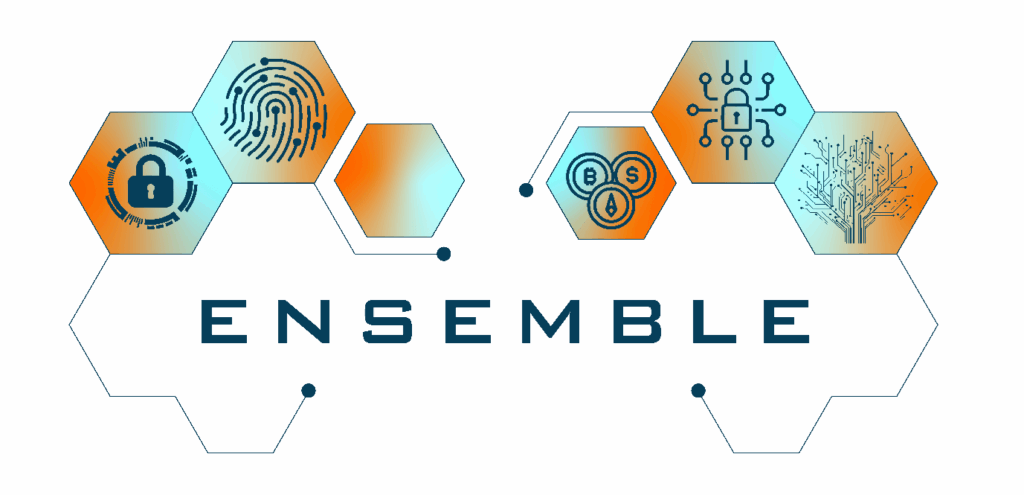
ENhanced AI-baSEd cybercriMe-oriented collaBorative investigation technologies and capabiLitiEs
AI-based technology to detect and prevent cybercrime
Technological advancements create opportunities for sophisticated cybercrimes that, through innovative tactics and techniques, pose serious security and financial risks to the EU and beyond. The EU-funded ENSEMBLE project aims to combat cross-border cybercrime using advanced AI-based technology, multi-stakeholder investigation processes, training, and awareness. The project focuses on detecting and preventing ransomware, cyber fraud, data theft, extortion, unauthorised access, and crypto-jacking. It will develop an AI-based investigation toolbox to assist police authorities in detecting, extracting, processing, and analysing online information relevant to cybercrime activities. Additionally, it emphasises joint multi-stakeholder operations at both national and cross-border levels and will provide innovative training curricula and methods for police authorities, prosecutors, and judicial actors involved in these investigations.
Website: https://ensemble-he.eu https://cordis.europa.eu/project/id/101168360
Funding Programme: HORIZON-CL3-2023-FCT-01-06. Enhancing tools and capabilities to fight advanced forms of cyber threats and cyber-dependent crimes
Start date/End date: 1 November 2024 / 31 October 2027
Coordinator: ETHNIKO KENTRO EREVNAS KAI TECHNOLOGIKIS ANAPTYXIS, Greece
Total value of award: €3,663,143
Lero researchers: Martin Mullins, Barry Sheehan, Darren Shannon
Visually Impaired children and adolescents: bridging the gap with Personalized Prevention Strategies, Tools, Approaches, and Resources
The VIPPSTAR project aims to offer the first holistic framework for a life-long enhancement of health, well-being, and autonomy of children and adolescents with Visual Impairment (VI). We will support a personalized prevention of the profound and sometimes irreversible impacts of VI on individual psychological, educational, and social competence. VI can be identifiable shortly after birth, persists throughout the lifetime and is likely to have an impact on all areas of development. VIPPSTAR will include families and young individuals to overcome the burden of VI and achieve a healthy, independent life and full rights to engage critically and safely with future digital technologies for health, including AI systems. Self-empowerment and agency will be promoted moving from healthcare support to family, then self-administered serious gaming, personalized eLearning, and assistant-based coaching. The system will be co-designed together with youths to support a healthy physical and mental growth to adulthood. As a key innovation, we will study body image and identity development in youth with VI and consider its impact on digital media use in youth with VI, drawing concepts to develop personalized programs to prevent nutrition, limited mobility, and addiction to social media. A dedicated surveillance network will be established to collect data in different socio-economic and geographical groups to obtain an evidence-based comparison of the new programs with the national standard of care. All on aspects ethics, data protection, and AI use will be harmonized with the relevant regulations EU and guidelines for trustworthy AI: VIPPSTAR will establish the first regulatory Sandbox for digital health services in children and youths with VI, regulator with stakeholders according to the AI Act principles, also contributing to other EU initiatives.
Website: https://vippstar.eu
Funding Programme: HORIZON-HLTH-2024-STAYHLTH-01-02 Towards a holistic support to children and adolescents’ health and care provisions in an increasingly digital society
Start date/End date: 1 January 2025 / 31 December 2028
Coordinator: UNIVERSITA DEGLI STUDI DI BRESCIA, Italy
Total value of award: €8,152,256
Lero researcher: Cristiano Storni
Automated Inspection Robots for Surface, Aerial and Underwater Substructures
Robots for renewable energy structures’ automated inspection
Robots are increasingly used across various fields, and the renewable energy sector’s need for sustainability could benefit from robotic solutions in floating offshore wind farms. The EU-funded AEROSUB project will develop advanced robotic solutions for both fixed and floating offshore wind farms, focusing on improving operation and maintenance procedures to enhance the sustainability of renewable energy in challenging environments. The project will demonstrate how robotics, integrated with AI and data analytics, can reduce CO2 emissions from operations by up to 15 million tonnes and lower the levelised cost of electricity by 2.5 %. It will use various robotic platforms to optimise collaboration between humans and robots, minimising personnel exposure to hazardous environments.
Website: https://aerosub.eu/
Funding Programme: HORIZON-CL4-2024-DIGITAL-EMERGING-01-04
Start date/End date: 1 December 2024 / 30 November 2028
Coordinator: INESC TEC – INSTITUTO DE ENGENHARIADE SISTEMAS E COMPUTADORES, TECNOLOGIA E CIENCIA
Total value of award: €12,050,041
Lero researchers: Dan Toal, Edin Omerdic, Isela Ibrahimovic

Renewable Energy System Integration and Digitalization Upskilling Initiative for Sustainable Buildings [LIFE23-CET-RESSKILL]
The RESSKILL project is a comprehensive and transformative initiative strategically positioned to catapult the European Union into a more sustainable and resilient future. RESSKILL places a critical emphasis on human capital, understanding that skilled professionals are integral to achieving a sustainable energy future. Going beyond traditional educational efforts, the project is a multifaceted endeavor designed to meet the evolving needs of the renewable energy sector, with a specific focus on energy system integration and digitalisation for buildings and districts. This aligns with the broader vision of creating intelligent, energy-efficient urban spaces. RESSKILL incorporates Artificial Intelligence (AI) for skill needs identification, to ensure that the educational programs are dynamically tailored to the evolving demands of the construction industry, making the workforce not just competent but also agile in response to changing technologies and requirements. A distinctive feature of RESSKILL is the development of Micro Credentials, providing tangible validation of an individual’s expertise and ensuring alignment with industry standards. Case study education approach, based on real-world scenarios and success stories, is adopted to ensures that the workforce emerging from the RESSKILL program can apply theoretical concepts in practical situations. By incorporating gamification, RESSKILL transforms the educational process into an immersive and enjoyable journey, fostering a deeper understanding and retention of complex concepts. RESSKILL is not merely an educational initiative; it is a dynamic and adaptive force, leveraging AI, gamification, and case study education to empower the workforce. By investing in skills, knowledge, and digital proficiency, the project is steering the EU towards a more sustainable, energy-efficient, and technologically advanced future.
Website: https://www.resskill.eu https://webgate.ec.europa.eu/life/publicWebsite/project/LIFE23-CET-RESSKILL-101167278/renewable-energy-system-integration-and-digitalization-upskilling-initiative-for-sustainable-buildings
Funding Programme: LIFE23-CET-RESSKILL
Start date/End date: 1 12 2024 / 30 11 2027
Coordinator: UNIVERSITA DEGLI STUDI DI GENOVA, Italy
Total value of award: €1,577,929
Lero researcher: Fabiano Pallonetto
The master’s program offers you pathways corresponding to 8 ECSF (European Cybersecurity Skills Framework) profiles in the field of cybersecurity, essential in the digital economy of the future. With its hybrid format it balances your existing professional career with an online and in-person activities, providing the foundation to build your future career in cybersecurity.
Master’s format: Hybrid program, with both online, self-learning and in person activities
Course duration: 2 years, 4 semesters, part-time
Course start date: September 29, 2025
Certification: ARACIS (Romania) – accredited master’s degree (120 ECTS)
Language: English
Website: https://www.digital4security.eu/
Funding Programme: Digital Europe Programme (DIGITAL) DIGITAL-2022-SKILLS-03 -SPECIALISED-EDU
Start date/End date: 1 October 2023 / 30 September 2027
Coordinator: POLITEHNICA Bucharest
Total value of award: €19,985,593
Lero researcher: Anila Mjeda

Artificial Intelligence Experimentation Facility for the Energy seCTor
Developing AI solutions for the energy sector
AI is essential for optimising, testing, and maintaining innovative energy solutions and the energy sector as a whole. However, despite its advantages, extensive testing and validation are necessary to ensure the safety and durability of these systems. This testing often requires expensive and difficult-to-access tools. The EU-funded AI-EFFECT project aims to improve access to the tools and facilities needed for developing, testing, and validating AI solutions in the energy sector. To achieve this, the project will establish a novel European testing and experimentation facility, composed of distributed, virtually connected existing European facilities. Additionally, it will develop a digital platform that provides interoperability, scalability, and flexibility for users and resources.
Website: https://ai-effect.eu/
Funding Programme: HORIZON-CL5-2024-D3-01-11 – AI Testing and Experimentation Facility (TEF) for the energy sector – bringing technology to the market
Start date/End date: 1 October 2024 / 30 September 2027
Coordinator: EPRI EUROPE DAC
Total value of award € 5 656 875
Lero researcher: Fabiano Pallonetto

Rethinking the dEsign of streets And pubLic spaces to Leverage the mOdal shift to Climate-friendly Active Transport Everywhere [REALLOCATE]
The REALLOCATE project, coordinated by University College Dublin and involving 37 partners, is a Mission Project and part of the CIVITAS initiative. The project runs from 1 May 2023 to 30 April 2027 under the call HORIZON-MISS-2022-CIT-01. It addresses the urgent need to reduce transport emissions by 55% by 2030 and 90% by 2050 towards climate neutrality, by promoting active, safe, and inclusive mobility. The project empowers ten twinned Mission Cities—Gothenburg with Tampere, Heidelberg with Utrecht, Lyon with Warsaw, Budapest with Zagreb, and Barcelona with Bologna—by providing horizontal thematic expertise to develop zero-emission, shared, inclusive, active, and human-centred mobility interventions. The project includes 15 pilots in urban and peri-urban areas, demonstrating innovative strategies to promote walking, cycling, and sustainable transport through urban design, behavioral nudging, and data-driven solutions to improve safety and livability. The project’s impact is further expanded by engaging ten Cascade Cities, which participate in capacity-building activities and receive replication packages and guidelines to help them develop plans for implementing at least one of the innovative solutions piloted. In summary, REALLOCATE advances sustainable urban mobility to help European cities achieve climate neutrality by 2030, setting a precedent for future initiatives focused on environmental sustainability and urban well-being.
Website: https://reallocatemobility.eu/
Funding Programme: HORIZON-MISS-2022-CIT-01
Start date/End date: 1 May 2023/30 April 2027
Coordinator: University College Dublin
Total value of award: €12,690,025
Lero researcher: Francesco Pilla

Reconstruction and Computational Modelling for Inherited Metabolic Diseases (Recon4IMD)
Our overall objectives are to accelerate the diagnosis, and enable personalised management, of inherited metabolic diseases (IMDs). Established academic technology for statistical genomic analysis, deep learning-based prediction of protein structure, and whole-body metabolic network modelling shall be applied to generate personalised computational models, given patient-derived genomic, transcriptomic, proteomic and metabolomic data. To train diagnostic models, a comprehensive clinical team will recruit 1,945 diagnosed patients with a wide variety of IMDs, then validate the clinical utility of personalised computational models on a set of 685 undiagnosed patients. An enhanced human metabolic network reconstruction, especially for lipid metabolism, reaction kinetics and inherited metabolic disease pathways, will increase the predictive capacity of cellular and whole-body metabolic network models. As an exemplar for other IMDs, personalised computational modelling will be used to identify compensatory and aggravating mechanisms that associate with clinical severity in Gaucher disease. The predictive capacity of personalised models will be validated by comparison with additional empirical investigations of protein structure and function as well as metabolomics, tracer-based metabolomics and proteomics of patient-derived in vitro disease models. To maximise the potential for impact, personalised modelling software will be developed to be generally applicable to a broad variety of IMDs, and implemented in a way that is both accessible to clinicians and admissible to regulatory authorities. Sustainability will be promoted by development of a roadmap for a European foundation to aid personalised diagnosis and management of IMDs, informed by broad stakeholder consultation. This is a unique opportunity to realise the potential of personalised computational modelling for a broad set of rare diseases, which is a field where European collaboration is an essential for progress.
Website: https://www.recon4imd.org/
Funding Programme: Co-funded by the European Union’s Horizon Europe Framework Programme (HORIZON-HLTH-2022-TOOL-12-01), the Swiss State Secretariat for Education, Research and Innovation, and by United Kingdom Research and Innovation.
Start date/End date: 1 June 2023 / 31 May 2027
Coordinator: University of Galway, Ireland
Total value of award: € 7,881,904
Lero researcher: Fergal McCaffery
Advancing Key Digital Skill Capabilities in the SME Sector [DigiAdvance]
The DigiAdvance project aims to address digital skills gaps in the SME sector through the provision of low-cost, demand-driven, tailored training in key digital technologies for SME owners, managers and employees. DigiAdvance is an EU-funded platform designed to help small and medium enterprises (SMEs) improve their digital skills. In today’s rapidly evolving digital landscape, SMEs often struggle to stay competitive due to a lack of digital competencies. DigiAdvance addresses this issue through two key resources: the Skills Mapping Tool and the Course Repository.
The DigiAdvance project responds to evidenced digital skills gaps, shortages, and mismatches in specialised technology areas such as blockchain, big data, and machine learning, in particular among small and medium-sized (SME) enterprises. DigiAdvance brings together experts from both the higher education sector and industry to support the development of advanced digital skills among SME owners, managers, and employees through the provision of high-quality training, mentorship, and networking opportunities. The project will design, develop and deliver short regional digital skills courses for SME employees in local languages. Regional courses will be complemented by a pan-European digital skills accelerator workshop series for business leaders. Course development will be preceded by a needs analysis to ensure the courses respond to the needs and expectations of the sector.
Website: https://digiadvance.eu/
Funding Programme: DIGITAL-2022-TRAINING-02 – Advanced Digital Skills ERASMUS+
Start date/End date: 31 January 2023 / 30 January 2027
Coordinator: Dublin City University, Ireland
Lero researcher: Irina Tal
Next Generation of Trustworthy Agri-Data Management [ENTRUST]
The advent of increased data generation and higher management needs has brought about both advantages and disadvantages. While well-prepared and financially stable organisations and corporations can easily adapt to these changes, individuals and smaller organisations struggle to keep up. The EU-funded Entrust project will assist the agricultural sector with data management and collection. To do so, it plans to train 11 Doctoral researchers to become experts in agri-data management and data executives. This will provide the agricultural sector with much-needed expertise, connections and innovation, which are all crucial for staying up-to-date and adapting to modern technologies and opportunities.
Website: https://entrustdn.eu/
Funding Programme: HORIZON-MSCA-2021-DN-01-01 – MSCA Marie Skłodowska-Curie Actions (MSCA)
Start date/End date: 1 January 2023 / 31 December 2026
Coordinator: Maynooth University, Ireland
Total value of award: €2,686,053
Lero researcher: Markus Helefert & Zohreh Pourzolfaghar

Applied Data-Science and AI for proactive SME service [PROACTsme]
The COVID19 pandemic has demonstrated the crucial importance of ensuring public service responsiveness to crisis to be able to accompany socioeconomic fallout. PROACTsme works towards this aim, placing the focus on smarter and digitised services for SMEs. Attention is specially put on the development and provision of personalised and proactive electronic public services, to reduce red tape for the business environment whilst anticipate policy and service needs, by this means building up a more resilient and competitive private sector in the different regions of the project.
Website: https://www.interregeurope.eu/proactsme
Funding Programme: Interreg Europe
Start date/End date: 1 March 2023 / 31 May 2027
Coordinator: Oficina de Gestión Empresarial – OGE, Spain
Total value of award: €1,515,447
Lero researcher: Barry Sheehan and the Centre for Emerging Risk Studies
Empowering rural communities to act for change [RURACTIVE]
In the heart of rural Europe, communities grapple with the urgent need for sustainability while preserving their unique way of life. These regions face a pressing dilemma: how to embrace innovation and social progress without losing their rural identity and heritage. With this in mind, the EU-funded RURACTIVE project will offer tailored, community-driven solutions to this critical challenge. Spanning 12 pilot areas across 7 EU Member States, 2 Associated Countries, and Switzerland, the project is a bold initiative aiming to empower rural communities to lead the way towards a more sustainable future. It equips these communities with knowledge, skills, and resources, promoting inclusive decision-making to ensure even the most vulnerable voices are heard.
Website: https://www.ruractive.eu/
Funding Programme: HORIZON-CL6-2022-COMMUNITIES-02-01
Start date/End date: 1 Sept 2023 / 31 August 2027
Coordinator: ALMA MATER STUDIORUM – UNIVERSITA DI BOLOGNA
Total value of award: €6,980,043
Lero researcher: Francesco Pilla

Technology based impact assessment tool foR sustaInable, transparent Deep sEa miNing exploraTion and exploitation [TRIDENT]
The deep sea holds both sensitive ecosystems and mineral resources. Therefore, before any activity starts, we must be able to evaluate, mitigate and monitor its impact. The EU-funded TRIDENT project will develop a monitoring and inspection system for environmental impact assessment of deep-sea exploration and future exploitation activities. Complying with international and national regulations, this new system will integrate new technology and innovative solutions to operate autonomously in remote areas under extreme conditions, providing real-time data to the authorities. TRIDENT will identify and measure all relevant physical, chemical, geological and biological parameters at the sea surface, mid-water and on the ocean floor. Moreover, it will identify gaps in existing data sets and develop solutions to address them.
Website: https://deepseatrident.eu/
Funding Programme: HORIZON-CL4-2022-RESILIENCE-01-02
Start date/End date: 1 January 2023 /31 December 2027
Coordinator: INESC TEC – Institute for Systems and Computer Engineering, Technology and Science
Total value of award: €11,845,429
Lero researcher: Dan Toal

Digital Transformations for Supporting Next-Generation Labour [NEXT]
The goal of the project is to narrow the existing gap between the rapid pace of digital transformation, and the training of specialists from different fields, especially those that are not related to IT. The issue is that at present the aforementioned specialists are not sufficiently skilled to efficiently work with digital technologies and tools, and to understand possible pitfalls in their use, including mental health issues and legal matters.
Website: https://nextstudy.eu/
Funding Programme: European Commission Erasmus+ KA2 CBHE
Start date/End date: 1 November 2023 / 31 October 2026
Coordinator: Slovak University of Technology, Bratislava (STUBA)
Lero researcher: Irina Tal

Addressing the problem of marine plastic waste through sustainable and circular solutions [BLUEPOINT]
BLUEPOINT project is an initiative to address the problem of marine plastic waste through sustainable and circular solutions. BLUEPOINT project aims to create a multi-stakeholder ecosystem of intercooperation, innovation, entrepreneurship and internationalization that leverages the marine plastic value chain and emerging business opportunities to establish a replicable circular economy model in the Atlantic- region. This will reduce the environmental impact of marine plastic, create new business opportunities (including acceleration of +25 companies) and lead the maritime sector towards a Blue Circular Economy.
Website: https://www.bluepointproject.eu/
Funding Programme: Interreg Atlantic Area
Start date/End date: 1 November 2023 / 30 June 2026
Coordinator: Gipuzkoa Provincial Council’s Department of Sustainability
Total value of award: €3,363,464
Lero researcher: Ger Dooly

Repositioning Participatory Design to Tackle Socio Environmental Challenges [REWORLDING]
In a world divided by socio-environmental issues, urgent actions are thwarted by societal polarisation. Different actors and communities experience these challenges disparately, silencing both human and non-human voices. With the support of the Marie Skłodowska-Curie Actions programme, the REWORLDING project will bring together diverse actors to design inclusive solutions for the interconnected worlds we inhabit. It will give a voice to the silent, including non-human actors like plants and rivers. Through its training programmes and collaborations, REWORLDING will translate research insights into tangible sets of capabilities, connecting project activities to global sustainability efforts. The project will use interdisciplinary methodologies, collective learning, participatory design, and action research.
Website: https://reworlding.eu
Funding Programme: HORIZON-MSCA-2022-DN-01-01
Start date/End date: 1 January 2024 / 31 December 2027
Coordinator : UNIVERSITEIT HASSELT, Belgium
Total value of award: €2,811,268
Lero researcher: Cristiano Storni

Mixed Reality Environment for Immersive Experience of Art and Culture [XTREME]
Engaging with art and music has a positive effect on health, but limitations such as venue location, personal constraints, scheduling conflicts, and costs often hinder access to these experiences. With this in mind, the EU-funded XTREME project aims to develop a human-centred mixed reality (MR) solution that transports concerts and performances to remote locations, removing physical constraints. This MR technology integrates real and virtual content, where users can share the experience virtually with selected social circles, promoting inclusivity. Eliminating travel requirements, XTREME provides a greener alternative. This groundbreaking project provides virtual access to immersive art and music experiences breaking down traditional barriers.
Website: https://xtremeitu.dk/
Funding Programme: HORIZON-CL4-2023-HUMAN-01-21
Start date/End date: 1 January 2024 / 31 December 2026
Coordinator: IT-UNIVERSITETET I KOBENHAVN
Total value of award: €7,255,954
Lero researcher: Martin Cunneen

The ROSETTA programme proposes a transformative agenda to examining the impact of technology in an increasingly accelerated, high pressured world. ROSETTA will provide 19 recruited fellows with the highest quality research environment and a training programme that ensures their ability to provide leadership in the sectors relevant to design evaluation and regulation of technology from a time perspective. ROSETTA will be coordinated by the University of Galway Ireland (main beneficiary) through Lero, Science Foundation Ireland Research Centre for Software and involves 4 other Irish universities: University College Cork, University of Limerick, University College Dublin, Trinity College Dublin. Fellows will complete a compulsory secondment at one of 20 Associated Partners. Fellows will be recruited from the fields of computer science, medicine, biomedical engineering, education, psychology, software engineering, information systems, human-computer interaction and business management. Fellows will choose their own research topic within one or more the ROSETTA themes, adding to the truly interdisciplinary nature of the programme. ROSETTA will incorporate international mobility, intersectoral exposure, and interdisciplinarity. Fellows will receive training on the latest, emerging time theories, methods, and equipment through five Summer/Winter schools. Fellows will be provided with a comprehensive set of courses to improve their transferrable skills to diversify their employment options. Fellows will have access to Lero supports such as workshops and seminars, industry collaboration, public engagement, and communications. Fellows will be uniquely positioned to design and evaluate technology, and policies and legislation on technology use with new expertise and perspectives on how technology affects our time. The total budget required to deliver ROSETTA is €3.5M. We request €1.8M from the European Commission to be matched by €1.7M from Lero and the main beneficiary.
Website: https://cordis.europa.eu/project/id/101126578
Funding Programme: Marie Skłodowska-Curie Actions (MSCA) COFUND 2022
Start date/End date: 01 January 2024/31 December 2028
Coordinator: University of Galway
Total value of award: €3,500,000
Lero Researcher: Dr Kieran Conboy
Streamlined Geriatric and Oncological evaluation based on IC Technology for holistic patient-oriented healthcare management for older multimorbid patients
An ageing population has resulted in growing numbers of complex multimorbid chronic patients who require medical support. Therefore, modern medicine requires a novel, patient-centred attitude for more effective treatment options, as well as lower costs and better decision-making. The EU-funded GERONTE project will combine expertise in public health and public sector digital transformation to harness digital technology to improve the healthcare outcomes of elderly patients with comorbidities. Using the model of cancer multidisciplinary management, it will co-design with patients, caregivers and professionals a patient-tailored approach that will ease care pathways, management and treatment decisions while reducing healthcare costs.
Website: https://geronteproject.eu/
Funding Programme: Horizon 2020 SC1-BHC-24-2020
Start date/End date: 1 April 2021/31 March 2026
Coordinator: Universite de Bordeaux
Total value of award: €5,998,759
Lero Researcher: Regina Connolly (DCU)

Sign Language Translation Mobile Application and Open Communications Framework
People who are deaf or hard of hearing face the challenge of interacting with others in real-life situations and are often excluded from accessing information in society. The EU-funded SignON project aims to develop a mobile application that will translate between different European sign and verbal languages. The application, a lightweight software running on a standard mobile device, will interact with a cloud-based distributed framework dedicated to the computationally heavy tasks. The application and the framework will be designed through a co-creation approach where users will work together with the SignON researchers and engineers. The application will be easily adaptable to other languages (sign and spoken) and modalities and will ultimately promote equitable exchange of information among all European citizens.
Website: https://signon-project.eu/
Funding Programme: Horizon 2020 ICT-2018-20
Start date/End date: 1 January 2021/31 December 2023
Coordinator: Dublin City University
Total value of award: €5,616,718
Lero Researcher: Anthony Ventresque/UCD

Safety Management Systems for Emergency Medical Staff
Emergency Medical Services (EMS) professionals, reports and recommendations from safety incidents, and an emerging body of literature from recent research, have recognised a need for a systematic and systemic approach to safety risk management within the EMS sector. In response to this, Safety Management Systems training for Emergency Medical Services (SMS4EMS) – a European partnership training initiative – will design, develop and deliver a Safety Management Systems (SMS) training solution to the EMS sector. The need for the project has been identified by EMS organisations who recognise the importance for safety, hazard and risk management for their personnel, the patients they serve, and as part of civil protection for the public and wider society.
Website: https://www.tcd.ie/cihs/projects/sms4ems.php
Funding Programme: EU ERASMUS+ Programme
Start date/End date: 1 November 2021/31 October 2023
Coordinator: Trinity College Dublin
Total value of award: €277,700
Lero researcher: Siobhan Corrigan/Derek Ross
Smart monitoring to make coastal cities climate-resilient
Climate change poses huge risks for European coastal cities. Rising sea levels, floods and storms can no longer be ignored. The intensification of extreme weather events, coastal erosion and sea-level rise are major challenges to be urgently addressed by European coastal cities. The EU-funded SCORE project will develop a strategy via a network of 10 coastal city ‘living labs’ to rapidly, equitably and sustainably enhance coastal city climate resilience. In addition to developing innovative platforms to promote business opportunities and financial sustainability of coastal cities, the project will provide prototype coastal city early-warning systems to enable smart, instant monitoring and control of climate resilience in European coastal cities.
Website: https://cordis.europa.eu/project/id/101003534/it
Funding Programme: Horizon 2020-LC-CLA-2020-2
Start date/End date: 1 July 2021/30 June 2025
Coordinator: Institute of Technology Sligo
Total value of award: €9,980,831
Lero Researcher: Francesco Pilla
Individual Change of HAbits Needed for Green European transition
Impacts related to climate change are evident in many sectors of human life, including health, economy and security. The European Green Deal has set the blueprint for a transformational change that will make Europe the first climate-neutral continent in the world. However, this will be difficult to achieve without the active involvement of citizens. With that in mind, the EU-funded I-CHANGE project will promote the strong participation and creative role of citizens and civil society towards environmental protection, as well as changes in habits and the development of more sustainable standards. To that end, it will adopt a multi-disciplinary, participatory approach and create a set of living labs to increase the public’s awareness of the scientific processes underlying climate change.
Website: https://ichange-project.eu/
Funding Programme: Horizon 2020 LC-GD-10-3-2020
Start date/End date: 1 November 2021/30 April 2025
Coordinator: Centro Internazionale in Monitoraggio Ambientale – Fondazione CIMA, Italy
Total value of award: €5,234,117
Lero researcher: Francesco Pilla
Robotic Survey, Repair and Agile Manufacture
Europe’s shipbuilding industry is well known for delivering new cutting-edge production processes. To maintain its competitive strength, it is important to improve shipyard productivity for manufacturing new high-technology vessels and increasing access to the specialist repair and maintenance market. The EU-funded RESURGAM project will deliver a breakthrough in tooling solutions for friction stir welding (FSW), a high-integrity, low-distortion and environmentally benign welding technique. Combining FSW with a new tooling solution and novel in-water robotic systems, the project will deliver a low-cost system for ship steel welding and repair that can be retrofitted to existing CNC machines, allowing for block connections in the shipbuilding process as well as for damaged ships to be repaired in place, without needing a dry-dock.
Website: https://www.resurgamproject.eu/
Funding Programme: Horizon 2020-EU.3.4 MG-3-7-2020
Start date/End date: 1 February 2021/31 January 2024
Coordinator: European Federation for Welding Joining and Cutting, Belgium
Total value of award: €6,123,140
Lero Researcher: Daniel Toal, UL
TwinAIR aims to improve urban life by tackling the challenge of indoor air quality improvement by understating its complex interrelationship with external factors. This is achieved by introducing a novel set of tools for identifying sources and tracing a variety of pollutants and pathogens, for enhancing understanding of their effects and assessing their impact on health, for controlling building management systems and services in ways that mitigate part of the impacts and for helping citizens to develop better insights into pollution impacts, along with encouraging healthier, more sustainable choices.
Website: https://twinair-project.eu/
Funding Programme: HORIZON-HLTH-2021-ENVHLTH-02-02
Start date/End date: 1 September 2022/31 August 2026
Coordinator: University of Patras, Greece
Total value of award: €7,994,070
Lero Researcher: Francesco Pilla

SoluTions foR mItiGatinG climate-induced hEalth thReats
The main objective of TRIGGER is to identify, monitor and quantify direct and indirect impacts of climate change induced environmental hazards on human health through the direct collection of health, weather-climate, environmental and socio-economic data with user-friendly tools (sensors, simplified models, and data hub). The research activities lead to construct a concrete and workable toolbox, policy briefs and guidelines to support policy and decision makers in developing and applying climate actions supported by up-to-date medical scientific evidence, as well as to release educational activities and materials to raise awareness of the climate-health connections to the wider society.
Website: https://project-trigger.eu/
Funding Programme: HORIZON-HLTH-2021-ENVHLTH-02-03
Start date/End date: 1 September 2022/31 August 2026
Coordinator: University of Bologna, Italy
Total value of award: €11,227,759
Lero researcher: Francesco Pilla

Versatile artificial intelligence investigative technologies for revealing online cross-border financing activities of terrorism
Anti-FinTer will improve law enforcement capabilities, increase capacity and develop expertise in the area of terrorist financing associated with activities in dark web, crypto-assets, new payment systems, and darknet marketplaces.
Website: https://anti-finter.eu/
Funding Programme: Internal Security Fund – Police Programme
Start date/End date: 1 January 2022/31 December 2024
Coordinator: Austrian Institute of Technology (AIT)
Total value of award: € 1,347,789
Lero Researchers: Martin Mullins/Martin Cunneen/Darren Shannon/Kevin McDonnell

Enhancing Citizen Observatories for healthy, sustainable, resilient and inclusive cities
CitiObs will consolidate and apply tools and practice-based knowledge for co-creating data, knowledge and local action via Citizen Observatories (COs): these tools will enhance existing and new citizen observatories to engage citizens and marginalised communities, add value to environmental observations in the urban context, increase and validate citizen observations of the urban environment as part of the existing in-situ Earth Observation systems, co-create inclusive local actions for sustainability and ensure that CO data contributes to research and policy development towards the objectives of the European Green Deal. To ensure broad use, the CitiObs tools and approaches will be developed in co-creation with COs in 5 Frontrunner cities, finetuned with 30 Implementer cities and showcased to 50 Fellow cities.
Website: https://citiobs.eu/
Funding Programme: HORIZON-CL6-2022-GOVERNANCE-01-08
Start date/End date: 01 January 2023/31 December 2026
Coordinator: NILU STIFTELSEN NORSK INSTITUTT FORLUFTFORSKNING, Norway
Total value of award: € 5,272,950
Lero researcher: Francesco Pilla

Heritage activation through engaging experiences towards sustainable development
The future of Europe’s rich cultural heritage is facing several challenges due to various threats including climate change, natural or man-made disasters and lack of finance. Meanwhile, global processes have a deep impact on the values attributed by communities to urban areas and their settings. Despite Europe’s common values and creative diversity of traditions, crafts, arts and architecture, social discrimination, based on ethnicity, race, sex or gender and other characteristics persists in Europe, and is one of the key drivers of social exclusion. Access to cultural heritage experiences contributes to social cohesion and inclusion, by strengthening resilience and the sense of belonging and improving well-being. In this view, there is a need for new design solutions that are resilient to the changing conditions and sensitive to local cultural heritage, and to local topographic and climatic conditions. HERITACT will consider cultural transformations driving sustainability and will explore new cooperation paths among relevant stakeholders, interested in designing a new European way of life in line with the New European Bauhaus. To this end, HERITACT intends to empower communities’ co-creation capacity and to redefine the role of cultural heritage in urban regeneration. HERITACT will identify and enhance community-oriented processes and will introduce innovative and inclusive architectural and design solutions and cultural-artistic practices to support environmental and cultural sustainability, and to strengthen the cultural and creative industries through community awareness and policy making across European urban areas of many different scales and cultural settings. Interdisciplinary methodologies will provide stakeholders at 3 different cultural urban contexts across Europe a decision-support system based on collaborative approaches for the reactivation of unused cultural heritage spaces, and/or for enhancing diverse communities’ cultural identity and values.
Website: https://www.heritact.eu/
Funding Programme: HORIZON-CL2-2022-HERITAGE-01-10
Start date/End date: 01 March 2023/28 February 2026
Coordinator: PANEPISTIMIO PATRON, Greece
Total value of award: €2,999,389
Lero researcher: Francesco Pilla
Delivering a useable method for mapping groups in attitude networks by developing a robust prototype, development community, and exploitation model to maximize the social value of the breakthrough
There is a way to construct bipartite graphs directly from opinion surveys. The ERC-funded Attitude-Maps-4-All project will do so by applying a mathematical method that will yield a network representation of opinion-based groups. The method uncovers group structure, locates individuals in the space, allows the application of network methods to analyse their relations, and detects ideological polarisation, providing new insight on social attitudes and opinions, in a wide range of disciplines related to modelling attitudes and human behaviour. Understanding these processes is essential for addressing urgent social challenges requiring cross-partisan synchronisation of core attitudes and opinions. The project will prototype a robust software architecture and training resources, test and assess them, and explore cooperation for commercialisation.
Website: https://cordis.europa.eu/project/id/101069264
Funding Programme: ERC-2022-POC1 – ERC PROOF OF CONCEPT GRANTS1
Start date/End date: 01 September 2022/29 February 2024
Coordinator: University of Limerick, Ireland
Total value of award: €150,000
Lero researcher: Mike Quayle
Systems Methods Context
SyMeCo (Systems, Methods, Context) proposes a transformative agenda, one that is cognisant of the changing landscape of software development, while seeking to shape it. The key research strands explore what we build (Systems), how we build these systems (Methods), for the world we want (Context). The 60-month research training programme will fund 16 postdoctoral fellowships at Lero, and will incorporate international mobility, intersectoral exposure, and interdisciplinarity. Lero is Ireland’s Research Centre for Software, headquartered at the University of Limerick (UL, Beneficiary), with partners in other Irish universities and institutes of technology. The Implementing Partners will be University College Cork, University College Dublin, Dublin City University, National University of Galway and Trinity College Dublin. The ten Associated Partners are drawn from Lero’s extensive Industry network and comprise a mixture of multi-national corporations and SMEs. The programme aims to attract researchers from the fields of computer science, software engineering, information systems, human-computer interaction and business management. During their 2-year fellowship, fellows will receive discipline-specific skills training to assist career development and will be provided with a comprehensive set of courses to improve their transferrable skills to diversify their employment options. Fellows will also avail of a 4-day Summer School incorporating the themes of Systems, Methods, Context with one day dedicated to Industry & Entrepreneurship. Trained fellows will be attractive to industry, the public sector or academia. The SyMeCo research training programme will produce the next generation of European leaders in software development that will have the skills to help in Shaping Europe’s Digital Future and contribute to the newly launched European Declaration on Digital Rights and Principles. This proposal seeks €1.52 million EC funding to match Lero co-funding of €1.38 million.
Website: https://symeco.lero.ie/
Funding Programme: Marie Skłodowska-Curie Actions (MSCA) COFUND 2021
Start date/End date: 01 January 2023/31 December 2027
Coordinator: University of Limerick, Ireland
Total value of award: €2,900,000
Lero researcher: Brian Fitzgerald
Leadership for Sustainable Digital Transformation in Europe
DIGI+ is a world-class research fellowship programme, cofunded by MSCA, on Sustainable Digital Transformation that aims for a new generation of creative, entrepreneurial and innovative researcher leaders, able to face current and future challenges aligned with EU’s Digital and Green Agenda. Driven by the ambition of sustainable ecosystems the DIGI+ research programme is focussed on developing innovative digital transformation approaches addressing cross-disciplinary challenges, relevant to current policies and strategies in the European Research Area. The programme funds 20 Postdoctoral Researchers to advance digital transformation practices in four multidisciplinary research themes: 1) Innovative Business Models and Data Ecosystems; 2) Digital Culture and Skills ; 3) Data Governance; 4) Innovative Digital Technologies and Adoption aligned with the EU sustainable development goals.
Website: https://cordis.europa.eu/project/id/101081609
Funding Programme: Marie Skłodowska-Curie Actions (MSCA) COFUND 2021
Start date/End date: 01 January 2024/31 December 2028
Coordinator: Maynooth University, Ireland
Total value of award: €3,400,000
Lero researcher: Markus Helfert
Renewable Energies System for Cities
Guided by its ambitious target to achieve carbon-neutrality by 2050, the EU is throwing a spotlight on the technology supporting this green transition while also focusing on the general skillset of the working force in terms of employing and mastering sustainable technologies. The EU-funded RES4CITY project envisions a codesigned educational framework for upskilling the workforce to integrate, influence, and combine the existing best practices for renewable energies and fuel technologies in the cities. RES4CITY will define microprogrammes, develop serious games for learning and training, establish the industry-academy programme, and analyse industry-based case studies. The programme will be developed and tested in coordination with public governance, industry, NGOs and citizens.
Website: https://www.res4city.eu/
Funding Programme: HORIZON-CL5-2021-D3-02
Start date/End date: 01 October 2022/30 September 2025
Coordinator: Maynooth University, Ireland
Total value of award: € 2,499,934
Lero researcher: Fabiano Pallonetto

Flexible energy systems Leveraging the Optimal integration of EVs deployment Wave
FLOW boosts and demonstrates multifaceted EV smart charging and V2X integration into energy systems thanks to a range of comprehensive solutions providing answers to the needs of all actors involved. These solutions include highly replicable user-centric products, concepts, configurations and mechanisms to optimise operation. Cross-sector harmonisation and standardisation is delivered to facilitate activities of stakeholders and EV users. Advanced interoperable solutions enhance planning, operation and assessment of EV charging for seamless integration into the energy system and identification of the most appropriate scenario based on a multi-criteria model, leveraging appropriate business models and tailored services. FLOW also delivers multi-actor orchestration to ensure data exchange and synchronisation across actors for VGI and EV flexibility services. These solutions are deployed in 5 demonstrations (including 2 testbeds and 3 large-scale demos) in CZ, IE, IT, DK, and ES covering a wide range of applications (e.g. V1G/V2B/V2H/V2G, public/private/semi-public, urban/rural/touristic, car/small- & medium commercial) to validate and quantify the benefits associated with enabling and valorising EV flexibility, alleviating grid challenges, and fostering mobility and energy decarbonization. Expected impacts include GHG emission reduction of 0.6MtCO2/y grid reinforcement saving up to 1.3B€/country, increase local RES by 14% and avoid RES curtailment by 4TWh. The consortium includes 26 partners from 9 European countries covering the entire value chain, including OEM, technology providers, CPOs, aggregators, DSOs, TSO, ICT developers, RTOs experts in users, mobility, harmonisation, optimisation tools, energy integration and leveraging the networks of umbrella associations from the electromobility and the DSOs. These ensure replicability and scalability to foster the EV penetration trends, thanks also to comprehensive communication, dissemination and exploitation actions.
Website: https://cordis.europa.eu/project/id/101056730
Funding Programme: HORIZON-CL5-2021-D5-01-03
Start date/End date: 01 July 2022/30 June 2026
Coordinator: FUNDACIO INSTITUT DE RECERCA DE L’ENERGIA DE CATALUNYA, Spain
Total value of award: €9,873,630
Lero researcher: Fabiano Pallonetto

Blockchain for the Environment: Open Interdisciplinary Education on Generating Disruptive Change through Impactful DLT Applications
Environmental issues are the most pressing nowadays and certain changes in social behaviour could help to solve some of them. Blockchain – the technology that creates the foundation for trust between people without the need for intermediaries – if applied soundly, could impact social behaviour and contribute to the mitigation of the environmental crisis we are facing. The Blockchain technology is currently at the stage of development when we can still shape the impact it will produce in the years to come. Training computer scientists in using this technology in a fair, creative, inclusive way is crucial to bring about a new paradigm in organising human activities. The challenge is to bridge the gap between, on the one hand, narrow specialised IT professionals who understand how Blockchain technology works but lack knowledge from the real-world domains where the technology could actually produce positive impact, and, on the other hand, the professionals from such domains as environmental protection, medicine, agriculture etc. – who have expertise in their own domains, but no knowledge of Blockchain. In order to bridge this gap, the project will aim to equip Computer Science students and professionals with a methodology enabling them to leverage Blockchain’s potential, and with specialised knowledge from the field of Environmental Studies, where innovative Blockchain-based solutions could produce significant positive impact. The course will also teach Computer Science students Design Thinking methodologies to help them come up with ideas of Blockchain applications to produce social and environmental impact. A human-centred approach to education and research in this field, including ethical aspects, will help computer science students broaden their perspectives and create new knowledge. The second part of the course will be aimed at students in environmental sciences, teaching them the basics of blockchain, in order to help facilitate the interdisciplinary dialogue.
Website: https://bc4eco.eu/
Funding Programme: ERASMUS + Cooperation Partnership in School Education (Key Action 2)
Start date/End date: 01 February 2022/31 January 2025
Coordinator: Aalborg University, Denmark
Total value of award: €276,450
Lero researcher: Tiziana Margaria
Relaxed Semantics Across the Data Analytics Stack
The RELAX European Doctoral Network aims to train a cohort of highly mobile and adaptable researchers to become experts in the design of scalable and efficient data-intensive software systems. These experts will master the specific skill of navigating the semantics or correctness conditions of applications, with the goal of enhancing scalability, response times, and availability. Working across the disciplinary specialisms of data science, data management, distributed computing and computing systems, the Fellows will develop knowledge of the broad issues underpinning data analytics systems. The bespoke training programme fosters intellectual enquiry and combines technical and scientific research training with courses in innovation, management and leadership. The training network addresses a critical skills gap in data analytics expertise, which needs urgently addressed to support innovation and employment in a fast-growing European data economy. The 14 partner organisations representing 8 countries will benefit first-hand through intersectoral collaboration and an Open Innovation model.
Website: https://cordis.europa.eu/project/id/101072456
Funding Programme: Marie Skłodowska-Curie Actions (MSCA) HORIZON-MSCA-2021-DN-01
Start date/End date: 1 March 2023/28 February 2027
Coordinator: CHALMERS TEKNISKA HOGSKOLA AB, Sweden
Total value of award: €2,537,878
Lero researcher: David Gregg

TRACE-WORK
Traces of Work: Developing human-centered design principles for leveraging digital traces of activity in knowledge work [TRACE-WORK]
Optimising remote work through digital traces
In the rapidly evolving landscape of remote and hybrid work, the absence of well-defined concepts around digital traces in computer-supported cooperative work (CSCW) poses a pressing challenge. Despite the vital role of traces such as change logs and timestamps in coordinating work, the fields of CSCW and human-computer interaction lack a systematic exploration of their significance. This knowledge gap hampers the development of human-centred design principles for interactions with traces. With the support of the Marie Skłodowska-Curie Actions programme, the TRACE-WORK project aims to establish a typology of traces through empirical studies, providing insights into the design of workplace technology in the professional landscape. The overall goal is to fill a crucial void in understanding the social impact of traces in the contemporary workplace.
Website: https://cordis.europa.eu/project/id/101110480
Funding Programme: Marie Skłodowska-Curie Actions (MSCA)
Start date/End date: 26 August 2024 / 25 August 2026
Coordinator: University College Cork, Ireland
Total value of award: €199,694
Lero researchers: Luigina Ciolfi and Ida Larsen-Ledet
Assessment of Prototype National Services Addressing Public Sector Regional Requirements
European Space Agency (ESA) project in collaboration with Skytek, the Tyndall National Institute and Strathclyde University to develop and test innovative Maritime Surveillance methodologies and technologies.
Website: https://www.maynoothuniversity.ie/national-centre-geocomputation-ncg/research
Funding Programme: European Space Agency (ESA) Pathfinder (via The European Space Research Institute)
Start date/End date: 1 January 2020 / 31 March 2023
Coordinator: Maynooth University, Ireland
Total value of award: €500,000, €367,004 of which will be drawn down.
Lero researcher: Tim McCarthy
Automated Relational Verification of Smart Contracts
Website: https://www.tcd.ie/scss/people/directorate/vkoutav/
Funding Programme: CISCO RFP-22-02: Web3.0: De-Centralized Computing, Blockchain, Cryptocurrency/Virtual Currency
Start date/End date: 01 July 2023 / 30 June 2024
Coordinator: Trinity College Dublin
Total value of award: €63,251
Lero researcher: Vasileios Koutavas
Automated Relational Verification of Smart Contracts
Website: https://www.tcd.ie/scss/people/directorate/vkoutav/
Funding Programme: Etherum Foundation Grants Programme
Start date/End date: 01 January 2024 / 31 December 2025
Coordinator: Trinity College Dublin
Total value of award: €28,302
Lero researcher: Vasileios Koutavas